Highlights:
- A roof or cover does more than add comfort — it protects appliances, countertops, and cabinetry from rain, sun, and temperature swings that would otherwise wear them down fast
- Pergolas, hardtop gazebos, attached patio covers, pavilions, and retractable awnings each suit different budgets and levels of permanence, so match the structure to your climate and how often you’ll use the space
- Roofing, countertop, and cabinetry materials should be chosen with weather resistance in mind, not just looks, especially in humid or coastal areas
- Layout matters as much as the cover itself — straight-line, L-shaped, U-shaped, and island configurations each work better depending on your yard size and how you like to entertain
- Start with core appliances like a grill and counter space, then add extras such as a pizza oven, sink, or beverage fridge over time as budget allows
- Getting multiple contractor quotes, understanding local permit requirements, and building in a cost buffer upfront can save major headaches once construction begins
- Simple seasonal maintenance, like sealing stone, checking the roof structure, and cleaning grease traps, keeps the whole setup functional and good-looking for years
Summer is the season when your backyard finally gets to show off. But if you have ever tried to grill in a surprise rainstorm or squinted through blazing afternoon sun while flipping burgers, you already know that an uncovered outdoor kitchen has its limits. A covered outdoor kitchen solves that problem and then some. It protects your appliances, keeps you comfortable, and turns your backyard into a space you will actually use from May through September (and probably beyond). Whether you are working with a small patio or a sprawling yard, there is a covered kitchen style that fits your space, your budget, and your taste. Let’s walk through the ideas, materials, and layout tips that will help you plan a setup you will love for years to come.
Why a Cover Changes Everything
It is easy to underestimate how much a roof or shade structure does for an outdoor kitchen until you actually have one. Here is what a good cover brings to the table:
- Protects appliances from rain, snow, and UV damage, which extends the life of your grill, refrigerator, and cabinetry
- Keeps you cooking comfortably even when the sun is directly overhead
- Reduces glare on countertops, making food prep easier
- Adds usable square footage to your home by creating a true extension of your indoor living space
- Increases resale value, since a well-built outdoor kitchen is one of the more attractive features for potential buyers Without a cover, most outdoor kitchens see heavy wear within just a few seasons. Stainless steel appliances pit and discolor, wood cabinetry warps, and stone countertops can crack from repeated freeze-thaw cycles. A cover is not just about comfort, it is an investment in the lifespan of everything underneath it.
Popular Types of Covers to Consider
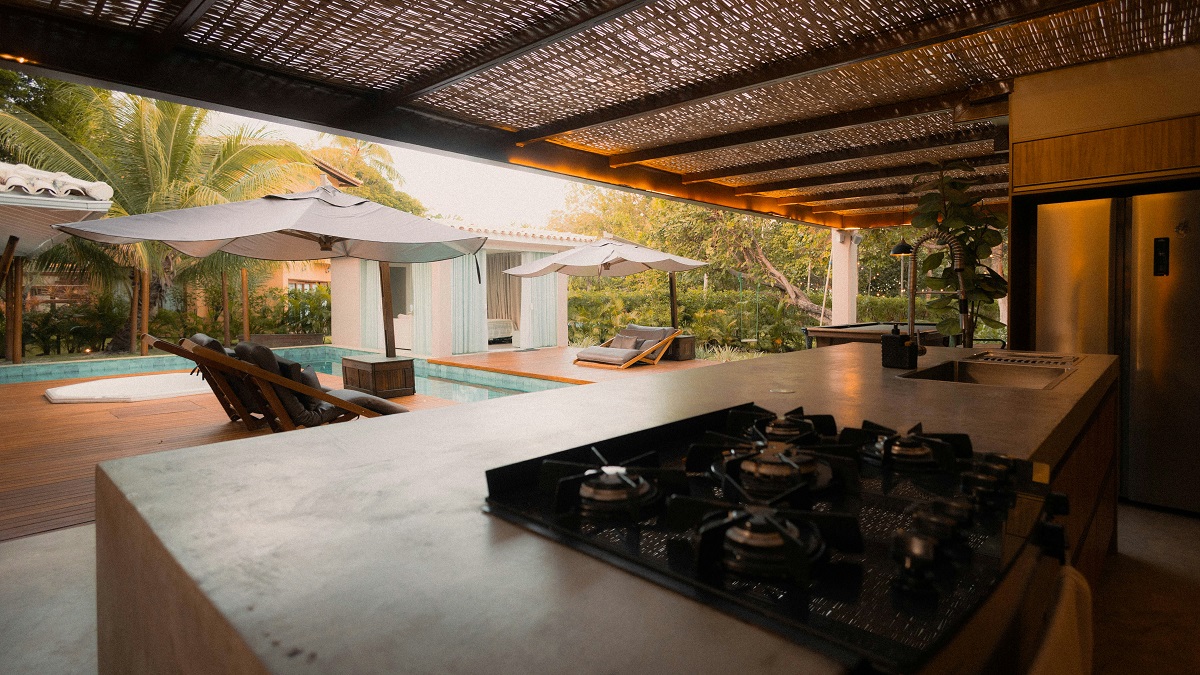
There is no single right answer here. The best cover depends on your climate, your budget, and how permanent you want the structure to be.
Pergolas With Louvered Roofs
Pergolas have come a long way from simple lattice frames. Modern louvered pergolas let you adjust the angle of the slats to control sunlight and airflow, and many models close completely to block rain. They pair well with string lights or a ceiling fan, and they tend to feel more open and airy than a solid roof.
Hardtop Gazebos
A hardtop gazebo offers full protection from the elements year round. These structures usually come with a peaked, shingled, or metal roof and can be freestanding or attached to your house. They are a solid choice if you want something that looks finished right out of the box without a lot of custom build work.
Attached Patio Covers
If your outdoor kitchen sits right against your house, an attached patio cover (sometimes called a lean-to or a solid patio roof) is one of the more cost-effective options. It ties directly into your home’s existing roofline, which can simplify both the design and the plumbing or electrical runs if you are adding a sink or lighting.
Pavilions
Pavilions are freestanding, fully roofed structures, often built with wood beams or steel posts. They tend to have a more architectural presence than a pergola and work well as a stand-alone focal point in a larger yard, especially if your kitchen is not directly next to the house.
Retractable Awnings
For homeowners who want flexibility, a retractable awning is worth a look. You get shade and rain protection when you need it, and full sun exposure when you don’t. Awnings are also one of the easier upgrades to retrofit onto an existing patio without a major construction project.
Picking Materials That Hold Up
Your material choices will affect both the look of your kitchen and how much maintenance you will be doing down the road. Roofing materials to consider include:
- Metal roofing, which is durable, low-maintenance, and handles heavy rain well
- Polycarbonate panels, which let light through while still blocking rain, a nice option if you don’t want a dark, enclosed feel
- Wood shakes or shingles, which look beautiful but require more upkeep, especially in humid climates
- Fabric or canvas covers, best suited for retractable systems and milder climates Countertop materials worth comparing include granite, concrete, and stainless steel. Granite is a classic choice that resists heat and scratching. Concrete can be poured into custom shapes and colors, giving you more design flexibility. Stainless steel is extremely durable and easy to clean, though it can show fingerprints and heat up in direct sun if it is not shaded. Cabinetry materials are another decision point. Stainless steel cabinets are the most weather-resistant option and a good match for coastal or humid areas. Polymer or high-density polyethylene (HDPE) cabinets resist moisture and never rust, making them popular in wetter climates. Natural stone veneer or brick gives a more built-in, permanent look but adds to both cost and construction time.
Smart Layout Ideas for Small and Large Spaces
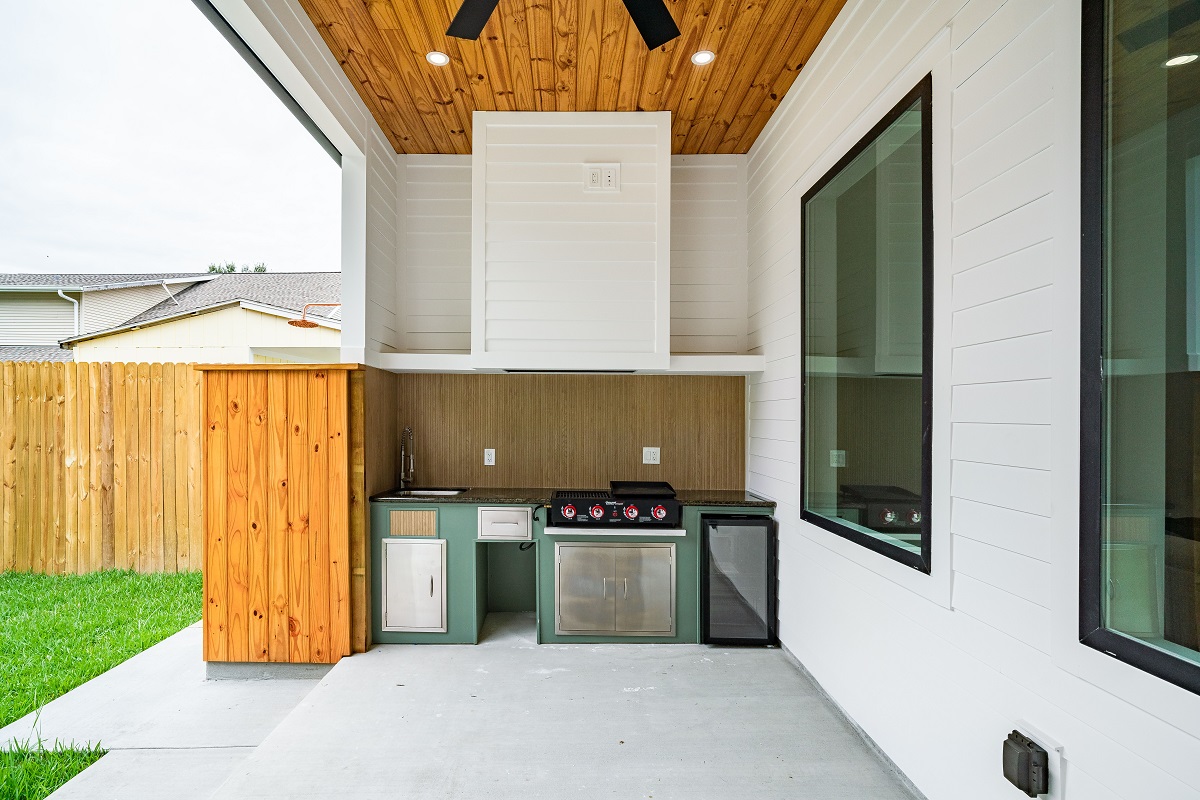
The shape of your yard, and how you plan to use the space, should guide your layout more than any trend.
The Straight-Line Layout
This is the simplest setup, with the grill, counter space, and storage arranged along a single wall or under a linear cover. It works especially well for smaller patios where space is tight and you want an efficient, no-frills cooking zone.
The L-Shaped Layout
An L-shaped kitchen adds a second counter section, which is great for separating prep space from cooking space. It also naturally creates a corner where you can add bar seating, letting guests hang out while you cook without getting in your way.
The U-Shaped Layout
If you have the room, a U-shaped layout gives you the most counter space and storage, plus it can wrap around to create a semi-enclosed feel. This layout works particularly well under a pavilion or gazebo, since the roofline can extend to cover the entire footprint.
The Island Layout
A freestanding island works well when your outdoor kitchen is positioned away from the house, perhaps under its own dedicated pavilion in the middle of the yard. It creates a natural gathering point and allows for cooking and socializing from multiple sides. When mapping out any layout, leave at least 36 inches of clearance for walkways and make sure your grill has enough ventilation clearance from the cover itself, since manufacturers specify minimum distances for safety.
Appliances and Features Worth Adding
Once your structure and layout are settled, it is time to think about what actually goes into the kitchen.
- A built-in grill is the obvious centerpiece, but consider pairing it with a side burner for sauces or sides
- A pizza oven has become a popular addition and works great as a conversation piece during summer parties
- A mini fridge or beverage center keeps drinks cold without constant trips inside
- A sink adds real convenience for washing produce or hands, though it does require running plumbing lines
- Under-cabinet lighting makes evening cooking safer and easier
- A vent hood, especially for kitchens with a solid roof, helps manage smoke and heat buildup You do not need every feature on this list to have a functional space. Many homeowners start with a grill and counter space, then add appliances over time as the budget allows.
Lighting and Ambiance Tips
A cover opens up lighting possibilities that an open-air kitchen simply does not have. String lights, recessed can lighting, or a small chandelier can all be mounted directly to the underside of a solid roof or pergola beam. For safety, task lighting over the cooking and prep areas is a must, while softer ambient lighting around seating areas sets the mood for evening entertaining. Dimmer switches are worth the small extra cost, since they let you shift from bright, functional light while cooking to a softer glow once dinner is served. A ceiling fan mounted to the cover is also a smart addition in warmer climates, helping to keep the air moving and smoke from the grill from lingering.
Budgeting for Your Project
Costs for a covered outdoor kitchen vary widely depending on materials, size, and how much custom work is involved. A simple attached patio cover with a basic grill island might run a few thousand dollars, while a full pavilion with high-end appliances, stone countertops, and custom cabinetry can climb well into six figures. Before you commit to a design, get quotes from at least two or three contractors, and ask for a detailed breakdown of labor versus materials so you know exactly where your money is going. It also helps to build in a buffer of ten to fifteen percent for unexpected costs, since outdoor construction projects often run into surprises once digging or demolition begins. Careful planning at this stage is one of the best ways to avoid common renovation disasters that come from underestimating scope or skipping permits. Talk to your local building department early, since many areas require permits for gas lines, electrical work, or any structure over a certain size, and skipping that step can lead to costly rework later.
Weatherproofing and Maintenance Tips
Even a well-built cover needs some upkeep to keep everything underneath it in good shape.
- Seal natural stone countertops annually to prevent staining and water absorption
- Check the roof structure each spring for loose fasteners, cracked panels, or signs of rot in wood beams
- Clean grease traps and grill components regularly to avoid buildup that can attract pests
- Inspect caulking and flashing where the structure meets your house, since gaps here are a common source of water damage
- Cover appliances with fitted covers during the off-season, even under a roof, for an extra layer of protection
- Trim nearby trees to reduce leaf litter and branch damage during storms Taking twenty minutes every few months to walk through this checklist can save you from bigger repair bills down the line.
Bringing It All Together
Designing a covered outdoor kitchen is really about matching the structure to how you actually want to live in your backyard. If you love casual weeknight grilling, a simple attached cover and a straight-line layout might be all you need. If you host regularly and want a true outdoor living room, a pavilion with a full appliance suite and dedicated seating area might be worth the investment. Either way, start with the cover itself, since it shapes every other decision that follows, from materials to layout to lighting. Take your time researching contractors, compare a few different structure styles in person if you can, and think honestly about your budget and how you will use the space. Do that groundwork now, and you will be enjoying meals under your new outdoor kitchen roof well before summer wraps up.